Why Hot Water Supply Lines Fail First
Of all plumbing failures occurring beneath concrete foundations, hot water line breaches are by far the most prevalent. When homeowners require specialized hot water slab leak repair Weston solutions, the root cause usually traces back to physics and metallurgy. Hot water supply lines experience drastic thermal cycling every single day. When water at 120 to 140 degrees Fahrenheit surges through copper pipes embedded in concrete or gravel, the metal expands along its length. When the tap is turned off, the line cools down and contracts.
Over tens of thousands of thermal cycles, this constant expansion and contraction rubs the soft exterior of copper tubing against abrasive concrete aggregate and coarse sand. In Weston's subtropical climate, this friction combined with chemical water mineral interactions inevitably wears down the pipe wall until a pressurized hot water line leak under slab Weston home foundations erupts.
Hallmark Warning Signs of a Hot Water Slab Leak
Because heated water rapidly transfers thermal energy into dense concrete and tile, hot water sub-slab failures produce several telltale symptoms that cold water leaks do not:
- Noticeable Warm Spot on Floor Weston: Walking barefoot across kitchen tile, bathroom slate, or hallway laminate and discovering an isolated area that feels like heated flooring or an electric blanket.
- Water Heater Running Constantly Weston: Hearing your domestic water heater tank burner firing indefinitely, or seeing electric resistance elements drawing power 24 hours a day without any hot water faucets open.
- Dramatic Spikes in Gas or Electric Bills: Because the water heater is continuously replenishing and heating water that escapes directly into the soil beneath your slab, monthly electric or natural/LP gas utility costs surge dramatically.
- Sudden Depletion of Hot Water: Experiencing lukewarm showers or running out of hot water in minutes because a substantial portion of the tank's heated volume is lost under the foundation.
- Steam or Moisture Along Lower Baseboards: Condensation forming on windows or floor molding adjacent to the warm slab area due to hot vapor rising through porous concrete.
How We Pinpoint Hot Water Leaks with Thermal Imaging
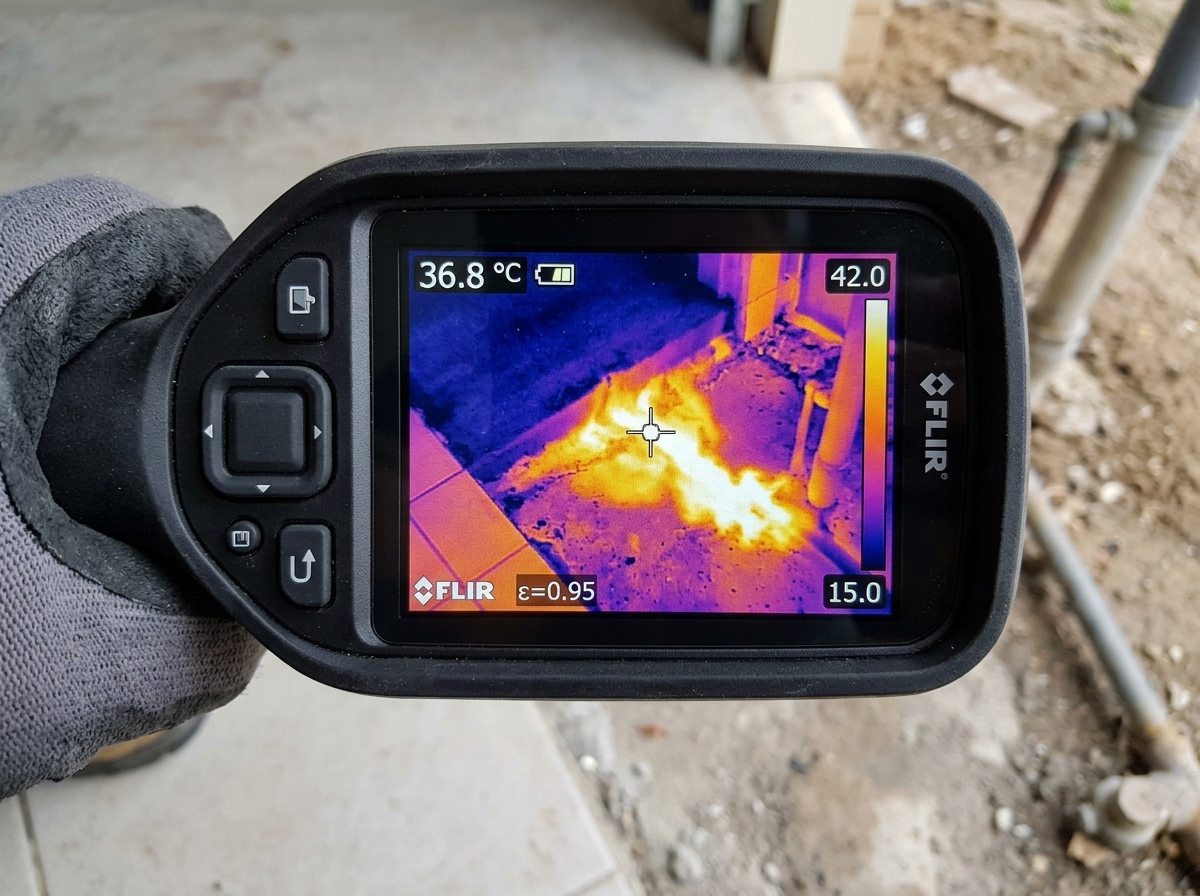
Locating a subterranean hot water breach is accelerated using state-of-the-art infrared thermal imaging technology. Hot water escaping beneath a foundation creates an expansive heat bloom within the slab. Our certified technicians use high-resolution thermal imaging cameras to scan the entire floor plan. The thermal display clearly renders surface temperature variances, displaying the exact pathway of the buried pipe and highlighting the radiant epicenter of escaping hot water.
Once the infrared image confirms the general anomaly, technicians follow up with precision acoustic sensors to verify the acoustic frequency of escaping pressure, ensuring pinpoint accuracy before outlining repair recommendations. Review our complete slab leak detection methodology for details.
Repair vs. Reroute: Choosing the Optimal Path
Once a hot water line breach is verified, homeowners face a critical choice: direct penetration or an overhead reroute.
Direct Spot Repair: This involves removing flooring tiles, jackhammering through the concrete slab, digging out the saturated gravel sub-base, and soldering a copper sleeve or replacement section. However, in older copper installations, the thermal stress that compromised this specific pipe section is likely affecting the rest of the under-slab hot run. Jackhammering can also vibrate and weaken adjacent brittle joints.
Overhead PEX Rerouting (Recommended): Instead of disturbing expensive flooring, technicians permanently decommission the buried hot water line beneath the slab. A new, continuous, flexible PEX hot water supply line is routed from the water heater, through interior wall cavities or across the insulated attic space, dropping down directly into the fixture manifolds. Learn how a clean slab leak reroute protects your living space from dust and floor damage.
Protecting Water Heaters and Associated Systems
A continuous subterranean hot water leak places extreme strain on your water heater, frequently causing premature tank failure, sediment buildup, or burned-out heating elements. During our inspection, we evaluate the condition of your water heater, verify thermal expansion relief, and coordinate necessary equipment repairs or replacements so your overall hot water system operates safely and efficiently.
Comprehensive Restoration for Weston Homeowners
Whether your home is located in established gated communities like Bonaventure, golf enclaves in Weston Hills, or master-planned neighborhoods like Savanna, hot water line failures require rapid, expert intervention. Read about our overarching approach to slab leak repair in Weston, explore broader residential whole-house repiping options for aging copper systems, or check our service areas for regional coverage information.